Can an Awning Increase Your House Value? What the Evidence Says

_format(webp)_On6jl.webp)
Can an Awning Increase Your House Value? What the Evidence Says
Every homeowner weighs up the same question before spending money on their property: will I get this back when I sell? It is a fair question, and one that gets asked about everything from new kitchens to garden offices. But when it comes to awnings, the answer is more interesting than most people expect.
The short version: yes, a quality awning can increase your property's value. The longer version involves understanding why outdoor living space commands a premium in the UK market, how energy efficiency factors into modern valuations, and what separates an awning that adds value from one that does not.
This article pulls together the available evidence from property surveys, energy research, and market data to give you a clear picture of what an awning actually does for your home's worth.
The Outdoor Living Premium
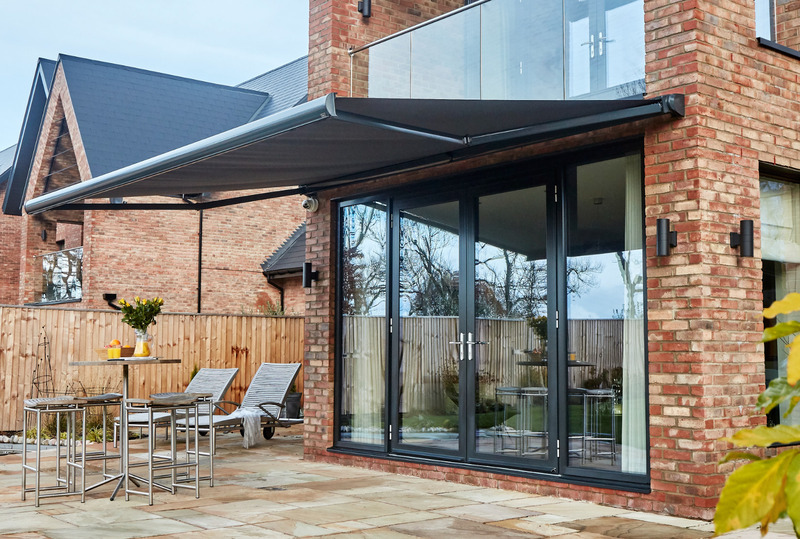
The relationship between outdoor living space and property value is well documented. According to data from the Royal Institution of Chartered Surveyors (RICS), well-designed outdoor living space can add between 5% and 15% to a property's value. That is a significant range, and where your property falls within it depends on how usable, attractive, and well-maintained that outdoor space is.
Rightmove surveys have consistently found that 83% of UK homebuyers consider a garden important when choosing a property. But it is not just about having a garden. It is about having a garden that functions as genuine living space. A bare patio with nowhere to sit comfortably in the sun (or shelter from a passing shower) is not the same proposition as an outdoor area that feels like an extension of the home.
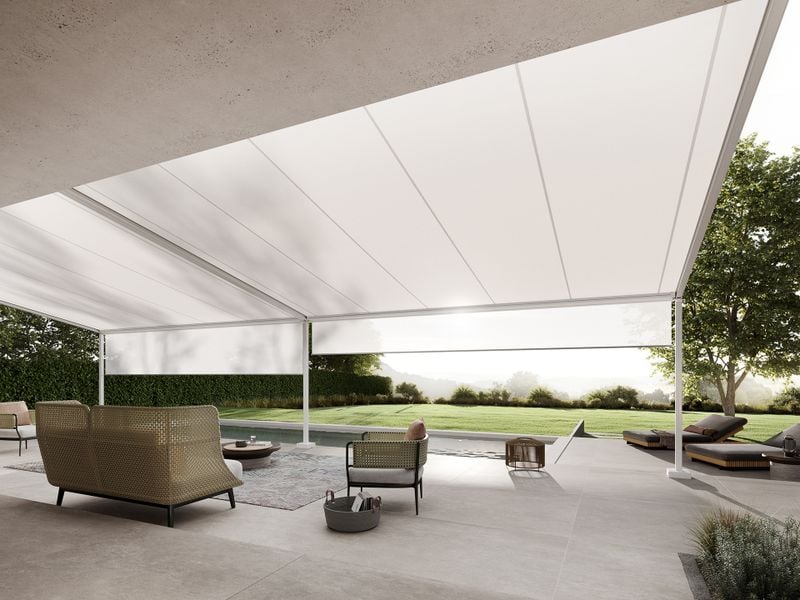
This is where awnings come in. A retractable patio awning transforms a basic patio or deck into a flexible outdoor room. It provides shade when the sun is too strong, shelter when the weather turns, and a defined sense of space that makes the area feel intentional rather than afterthought.
Knight Frank's research into post-COVID property trends found that demand for homes with outdoor entertaining space increased significantly from 2020 onwards. The pandemic fundamentally changed how people think about their homes, and the desire for usable outdoor space has not faded. Buyers who spent months confined to properties with limited outside areas now actively seek homes where they can eat, relax, and entertain outdoors.
For a property near the current UK average house price of approximately £290,000 (ONS data), even a modest 2% uplift in value represents £5,800. A 5% increase would mean £14,500. When you consider that a quality retractable awning typically costs between £2,000 and £5,000, the numbers start to look very favourable.
The Kerb Appeal Factor
Estate agents will tell you that buyers make emotional decisions in the first few seconds of viewing a property. Kerb appeal matters, and a well-chosen awning contributes to the overall impression of a property that has been cared for and thoughtfully improved.
A quality awning signals several things to a potential buyer. First, it suggests the current owners have invested in the property beyond the basics. Second, it creates a visual focal point in the garden that makes the outdoor space look finished and inviting. Third, it tells buyers that the outdoor area is genuinely usable, which is a selling point that photographs well on property listings.
This last point is worth dwelling on. In an era where most buyers first encounter a property through online listings, photography matters enormously. A garden photo showing a stylish awning extended over an outdoor dining area tells a story. It helps buyers imagine themselves living in that space, hosting summer barbecues, or enjoying a morning coffee outside. A bare patio, by contrast, requires more imagination.
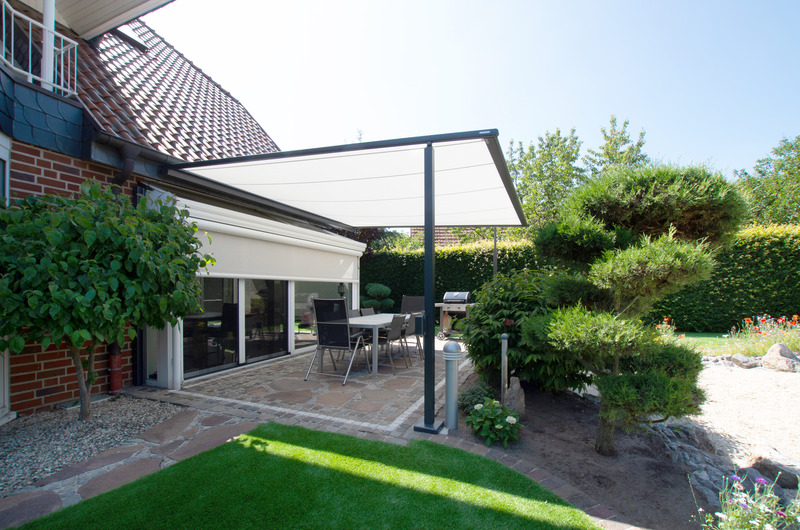 Pergola awning creating a defined outdoor living space">
Energy Savings: The Hidden Value
One of the most overlooked benefits of an awning is its impact on energy efficiency, and this is an area where hard data exists.
Research from the Building Research Establishment (BRE) indicates that external shading such as awnings can reduce solar gain by 10% to 25% on cooling costs for south-facing rooms. While air conditioning is less common in UK homes than in warmer climates, the growing trend toward warmer summers means this benefit is increasingly relevant. Even without air conditioning, reducing solar gain keeps rooms more comfortable, reduces the need for portable fans, and prevents the kind of overheating that makes south-facing living rooms unusable on hot afternoons.
With energy costs remaining a concern for UK households, any improvement that reduces energy consumption adds tangible value. Modern buyers are increasingly aware of energy performance, and while an awning will not single-handedly transform your EPC rating, it contributes to the broader picture of an energy-conscious home.
For properties with large south or west-facing glazing, the difference can be substantial. Conservatories and orangeries, in particular, benefit enormously from external shading. An awning that makes a conservatory usable during summer months effectively recovers a room that would otherwise be too hot to occupy for several weeks of the year.
Extended Usable Space
Think of an awning in terms of the usable square footage it creates. A typical patio awning covers an area of around 12 to 20 square metres. That space, once shaded and sheltered, becomes genuinely usable for dining, relaxing, or working from home on pleasant days.
To put that in perspective, consider the alternatives for adding similar living space to your property. A conservatory covering a comparable area would cost between £10,000 and £30,000. A garden room or office typically costs £15,000 to £25,000. An orangery could set you back £25,000 to £60,000. An awning achieving a similar functional outcome for a fraction of these costs represents exceptional value.
Of course, an awning is not a fully enclosed room, and it would be misleading to suggest the comparison is like-for-like. But for the months of the year when outdoor living is possible (and as we will see, that is more months than many people assume), an awning effectively extends your home's living space at a cost that other improvements cannot match.
The UK Weather Reality
Here is where we need to address the elephant in the room. The most common objection to investing in an awning in the UK is some variation of "but it rains all the time." The data tells a different story.
According to the Met Office, UK properties receive an average of 1,493 hours of sunshine per year. That works out to roughly four hours of sunshine per day across the year. During the summer months, many parts of England enjoy six to eight hours of daily sunshine, and in the East Midlands and eastern England, rainfall is actually lower than the national average.
Lincolnshire, where we are based, sits in one of the driest regions of the UK. The east of England receives significantly less rainfall than the west, and spring through autumn offers plenty of opportunities for outdoor living. It is not the Mediterranean, but it is far from the perpetual downpour that people sometimes imagine.
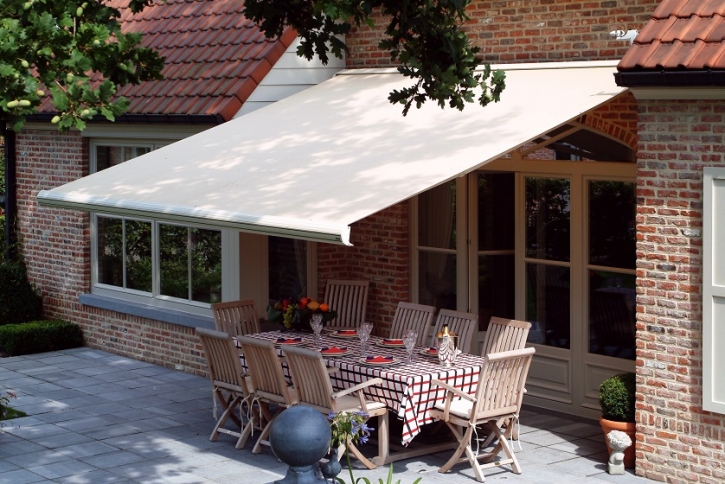
A quality retractable awning also provides protection from light rain, meaning your outdoor space remains usable during those grey but dry (or lightly drizzly) days that are common in the UK. Many of our customers tell us they use their awnings from April through to October, and some even on mild winter days.
The trend data also points in one direction. UK summers have been getting warmer, and the demand for shade and outdoor comfort is growing accordingly. An awning is not just an investment for today's climate. It is an investment for the trajectory we are on.
Which Awnings Add the Most Value
Not all awnings are equal when it comes to adding property value. Here is what the evidence suggests about which types and qualities deliver the best return.
Quality Over Budget
A cheap, poorly made awning can actually detract from a property's value. Faded fabric, a mechanism that sticks, or a frame that looks flimsy sends entirely the wrong message to buyers. By contrast, a well-engineered awning from a reputable manufacturer signals quality and permanence.
Premium brands like Markilux and Weinor use solution-dyed acrylic fabrics that resist fading for years, powder-coated aluminium frames that will not corrode, and mechanisms engineered for tens of thousands of cycles. These are the awnings that still look good after a decade and that buyers will see as an asset rather than a liability.
Retractable Over Fixed
Retractable awnings add more value than fixed alternatives for one simple reason: flexibility. Buyers want the option of sun or shade, open sky or covered patio. A retractable awning gives them that choice, while a fixed structure imposes a single configuration.
Motorised retractable awnings with wind and sun sensors represent the top end of the market and are the most attractive to buyers. The convenience of automated operation, combined with the safety of wind protection, signals a thoughtful, premium installation.
Professional Installation
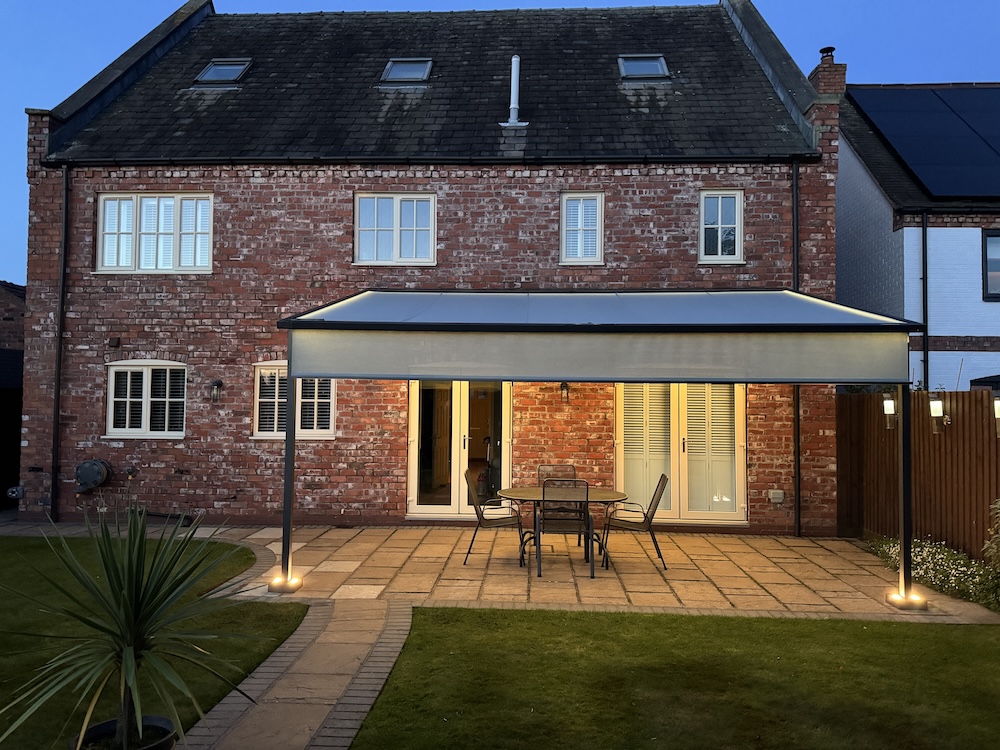
This point cannot be overstated. A professionally installed awning, properly fixed to the building with appropriate brackets and tested for wind resistance, adds value. A DIY installation with visible fixings, uneven projection, or questionable structural integrity does not.
Professional installation also means the awning has been correctly sized for the space, the fabric has been chosen to complement the property, and the electrics (for motorised models) have been safely connected. These details matter when a surveyor inspects the property or when a discerning buyer takes a close look.

ROI Compared to Other Home Improvements
To put awning investment in context, here is how it compares to other common home improvements in terms of cost and typical value added.
| Improvement | Typical Cost | Value Added | ROI Potential |
|---|---|---|---|
| Quality retractable awning | £2,000 to £5,000 | 2% to 5% | High |
| New kitchen | £8,000 to £20,000 | 5% to 10% | Moderate |
| Bathroom renovation | £5,000 to £15,000 | 3% to 5% | Moderate |
| Loft conversion | £20,000 to £50,000 | 10% to 20% | High |
| Conservatory | £10,000 to £30,000 | 5% to 7% | Low to moderate |
| Garden landscaping | £3,000 to £10,000 | 2% to 5% | Moderate |
What stands out in this comparison is the ratio of cost to potential return. An awning's lower price point means the percentage return does not need to be enormous for the investment to pay for itself. A £3,500 awning that adds 2% to a £290,000 property has generated £5,800 in value, representing a return of approximately 66% on the investment, and that is before factoring in the years of personal enjoyment you get from the awning while you live in the property.
By contrast, a £15,000 kitchen renovation that adds 7% to the same property generates £20,300 in value, a return of around 35% on the investment. The absolute numbers are larger, but the percentage return is lower.
This is the key insight that many homeowners miss. The best home improvements, in pure ROI terms, are often the smaller, smarter ones rather than the headline-grabbing major projects.
When an Awning Might NOT Add Value
Honesty matters in an article like this, so here are the situations where an awning may not deliver a meaningful return on investment.
North-facing properties with limited sun exposure. If your patio or garden gets very little direct sunlight, the practical case for an awning is weaker. Buyers will notice if the awning is positioned where it is rarely needed. That said, awnings still provide rain shelter and wind protection, so even north-facing installations have some utility.
Budget or poor-quality products. As mentioned earlier, a cheap awning that looks tired after two or three years can actually reduce a property's appeal. Peeling fabric, rust stains on the wall, or a mechanism that requires manual force to operate are all negatives.
Oversized or inappropriate installations. An awning that overwhelms a small patio, blocks light to interior rooms when extended, or looks out of proportion with the property will not add value. Proper sizing and design are essential.
DIY installations with visible problems. Uneven mounting, exposed wiring, or brackets that look insecure will concern buyers and surveyors alike. If anything, a poor DIY installation can raise questions about what other work has been done to a questionable standard.
Very short ownership periods. If you are planning to sell within six months, the investment may not be the most efficient use of your budget. Awnings add the most value when they have been in place long enough to demonstrate their quality and when the seller can show they have been professionally maintained.
Frequently Asked Questions
Do awnings add value to your home in the UK?
Yes, the evidence suggests that a quality, professionally installed awning can add value to a UK property. RICS data indicates outdoor living improvements can contribute to a 5% to 15% uplift in property value, and an awning is one of the most cost-effective ways to create usable outdoor living space. The exact amount depends on factors including awning quality, the property's orientation, and how well the installation complements the existing outdoor area.
Is an awning a good investment?
In terms of pure return on investment, a quality awning compares favourably to many more expensive home improvements. With a typical cost of £2,000 to £5,000 and the potential to add 2% to 5% to property value, the ROI can exceed that of a new kitchen or bathroom renovation on a percentage basis. You also benefit from years of personal use before any sale, which is value that does not show up in the numbers.
How much value does a patio add to a house UK?
A well-designed patio with usable features (including shade, seating areas, and good landscaping) can add between 5% and 10% to a property's value according to various property industry estimates. An awning enhances the value of an existing patio by making it usable in a wider range of weather conditions, effectively increasing the number of months per year the space can be enjoyed.
Do I need planning permission for an awning?
In most cases, a retractable awning does not require planning permission in the UK, as it typically falls under permitted development rights. However, there are exceptions. If your property is listed, in a conservation area, or if the awning projects significantly from the building, you may need to check with your local planning authority. A professional installer will be able to advise on whether your specific situation requires planning approval.
How long does a quality awning last?
A premium retractable awning from a manufacturer such as Markilux, properly installed and reasonably maintained, can last 15 to 20 years or more. The fabric will typically remain vibrant for 10 to 15 years thanks to solution-dyed acrylic technology, and the mechanical components are engineered for tens of thousands of open and close cycles. This longevity is part of what makes a quality awning a sound investment.
What is the best type of awning for adding value?
A motorised retractable awning with wind and sun sensors from a recognised manufacturer represents the best option for adding property value. This type of installation offers maximum flexibility, demonstrates quality, and provides the automated convenience that modern buyers expect. Pergola-style awnings are also increasingly popular and can add substantial value, particularly for properties where year-round outdoor use is desired.
The Bottom Line
The evidence points clearly in one direction. A quality, professionally installed awning is one of the most cost-effective improvements you can make to a UK property, both for your own enjoyment and for resale value. The combination of extended living space, energy savings, kerb appeal, and relatively low cost creates an ROI that many more expensive home improvements struggle to match.
The key qualifiers are quality and professional installation. A budget awning fitted as a weekend DIY project will not deliver the same results as a premium product installed by specialists who understand load-bearing, weatherproofing, and design.
If you are considering an awning for your property in Lincolnshire or the surrounding areas, we are happy to discuss which options would work best for your home. Call us on 01476 833131 or visit our showroom in Grantham to see our range of Markilux and other premium awnings in person.
_format(webp)_2oLLXp.webp)
_format(webp)_ZpIjLA.webp)
_oIh4o.webp)
_ZfaDDK.webp)
_Z1Mes7W.webp)
_sN62I.webp)
_format(webp)_17IoGE.webp)
_format(webp)_Z1MvXNb.webp)
_format(webp)_Zt58y5.webp)